From Rack-Level Backup to High-Voltage Systems — Validate Uninterrupted Power with Confidence
Reproducible | Quantifiable | Traceable BBU Validation
Why CHEN TECH ELECTRIC?
AI, cloud computing, and HPC are pushing rack power density to new levels, accelerating the shift from conventional UPS systems to rack-level Battery Backup Units (BBUs). Today, BBU validation goes far beyond confirming discharge capability. Engineers must verify backup runtime, response time after a DC bus voltage drop, stability under high-voltage and high-power conditions, and long-term State of Health (SOH). CHEN TECH ELECTRIC brings these requirements together in a dual-platform architecture: BT-2000 for low-voltage applications and PBT-2000 for high-voltage systems. Both are managed through the unified iBest software platform and can be integrated with temperature chambers, BMS communications, and ES/ET measurement modules to create a reproducible, traceable, end-to-end validation environment.
Solution Overview
One platform strategy for BBU testing from 48V to high-voltage systems. BT-2000 is optimized for 48V Core Pack applications, while PBT-2000 supports 600V, 800V, and 1000V high-voltage architectures with regenerative efficiency of up to 95%. Together, they help R&D, quality, and production teams validate backup runtime, transient switching, cycle life, SOH, and BMS interaction.
Key Validation Challenges
| Challenge | Engineering Question |
Validation Focus |
| Backup Duration | Can the system sustain the data-protection window after power loss? | CC / CP discharge and energy reports |
| Transient Switching | Is intervention fast enough after a Bus voltage drop? | Scenario-based test steps and transition capability |
| Dual Voltage Architecture | 48V and 800V architectures coexist | BT-2000 + PBT-2000 |
| State of Health | Is backup still reliable after aging? | SOH, cycling, DCIR |
| Communication Integration | Are BMS strategies and protection functions correct? | CAN / Modbus / SMBus |
Dual-Platform Validation Architecture
Choose the right test platform for each voltage level — from cell-level development to complete HV Pack validation:
|
Architecture Level |
Typical Voltage | Test Focus |
Recommended Product |
| Front-End Cell Testing | 5V | Material / cell screening, Pulse / DCIR | BT-2000 5V |
| BBU Module | ~48V | Capacity, internal resistance, cycling, SOH, communications, backup duration, Bus triggering | BT-2000 60V |
| HV Pack / HV BBU | 600 / 800 / 1000V | High power, regeneration, dynamic operating profiles, BMS | PBT-2000 |
Core Test Capabilities
Low Voltage | BT-2000 + iBest (~48V Core Pack / OCP)
- Recommended configurations: 60V/60A and 60V/100A; higher-current options include 60V/300A and 100V models. For cell-level development, 5V high-current systems are available.
- Validate capacity and backup runtime, charge/discharge performance, cycle durability, and DC bus / power-loss scenarios.
- Run pulse and dynamic-power profiles (Pulse / HPPC), application waveforms, and DCIR / ACIR measurements.
- High-precision measurement at ±0.02% F.S., charge/discharge transition in <5 ms, four current ranges, and modular multi-channel expansion.
High Voltage | PBT-2000 + iBest (800V Recommended)
- Supports 600V / 800V / 1000V systems, 100–500 kW power levels, and 200 / 600 / 1000A current configurations.
- Designed for high-power charge/discharge, cycle durability, Pulse / HPPC, FUDS / DST, and user-defined waveform testing.
- Fast transition in <2 ms, regenerative efficiency up to 95%, PF >0.99, plus dual operating modes for battery testing and battery simulation.
Advanced Integration Options
- Temperature Chamber — Validate backup performance and protection behavior across different temperature conditions.
- BMS Data Collector — Verify protection logic, dynamic charging strategies, and stage-transition conditions via CAN / Modbus / SMBus and other interfaces.
- ES-100B — Monitor individual cell voltages and voltage consistency.
- ET-100B/C — Monitor temperatures and hotspots at multiple measurement points.
- High-Voltage Fixtures & Interlocks — Add isolation and interlock protection for safer high-voltage testing.
Recommended Test Packages
|
Package |
Application | Recommended Configuration |
Coverage |
| BBU Cell Lab | Front-end cell testing | BT-2000 5V + Pulse / DCIR | Capacity, Pulse, DCIR |
| BBU Pack Basic | 48V Core Pack | BT-2000 60V/100A + CP / BMS / Chamber | Backup duration, cycling, BMS, environment |
| BBU Pack Pro | 48V high power / OCP | BT-2000 60V/300A + BMS / Chamber / ES / ET | High power, Bus scenarios, consistency |
| BBU HV 800V | High-voltage backup | PBT-2000 800V + regeneration / BMS / ES / ET | High power, regeneration, HPPC / waveforms, SOH |
One Software Platform: iBest
iBest provides a unified environment for creating, executing, monitoring, and analyzing BBU test procedures — reducing training effort and making test workflows easier to reuse across projects.
- Process Setup — Variable-based cutoff conditions, C-rate settings, process preview, and configurable protection limits.
- Test Modes — HPPC / DST / FUDS / Waveform / Pulse / DCIR / CP.
- Real-Time Monitoring — Live curves, scheduled pause, resume testing, and dual-layer protection.
- Data & Analysis — Reports, CSV / Excel export, dQ/dV, and SOC analysis (optional).
- System Integration — Temperature chambers, CANbus / BMS, external measurement equipment, and MES integration (optional).
Integrated Safety by Design
Safety is built around a layered workflow: Detection → Protective Action → Event Traceability. For high-voltage test environments, additional isolation and interlock measures can be incorporated to help protect operators, the DUT, and the test facility.
A typical system connects iBest on a PC with BT-2000 or PBT-2000 charge/discharge equipment, while integrating a temperature chamber, BMS communications, ES-100B voltage acquisition, and ET-100B/C temperature acquisition. The result is a single test environment for performance, communications, and environmental validation.
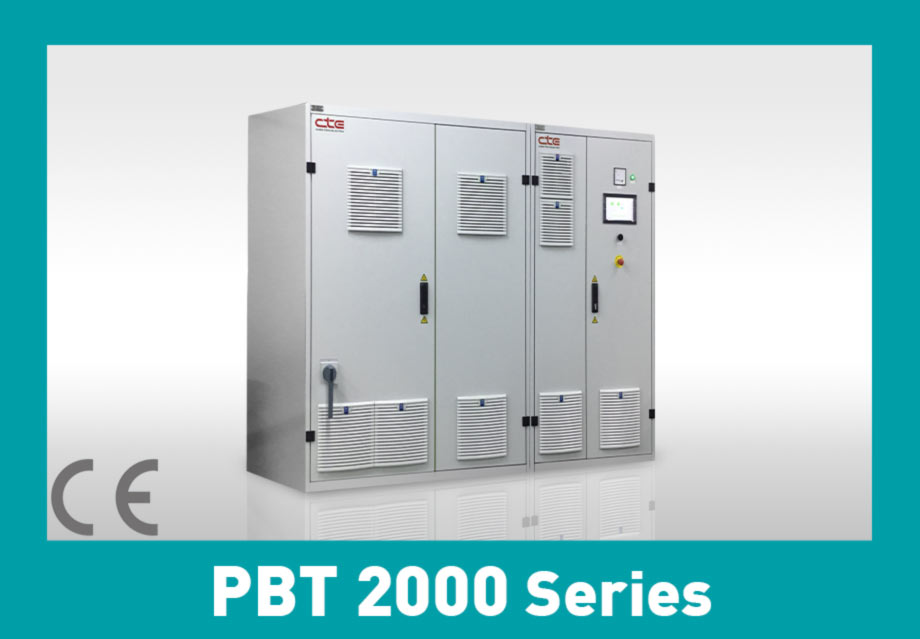
Eco Series – Power Battery Pack Test Equipment PBT 2000
- Voltage : 300, 600, 800, 1000V
- Current : ±200, ±600, ±1000A

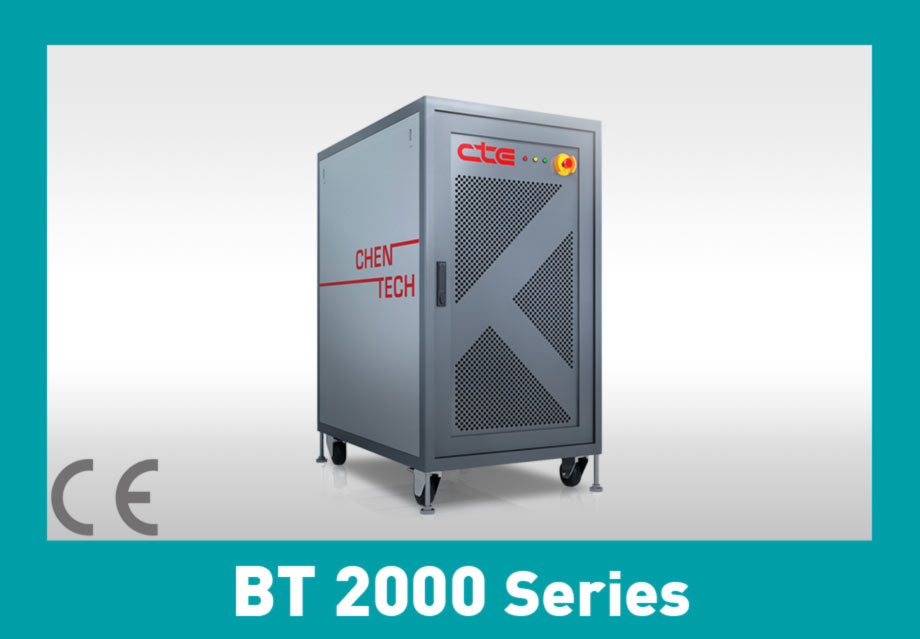
Compact Multi-range Battery Test Equipment BT 2000
- Voltage : 5V, 20V, 60V, 100V
- Current : ±1, ±5, ±10, ±20, ±30, ±60… ±500A


