Skip to Content

Category Archives: 未分類

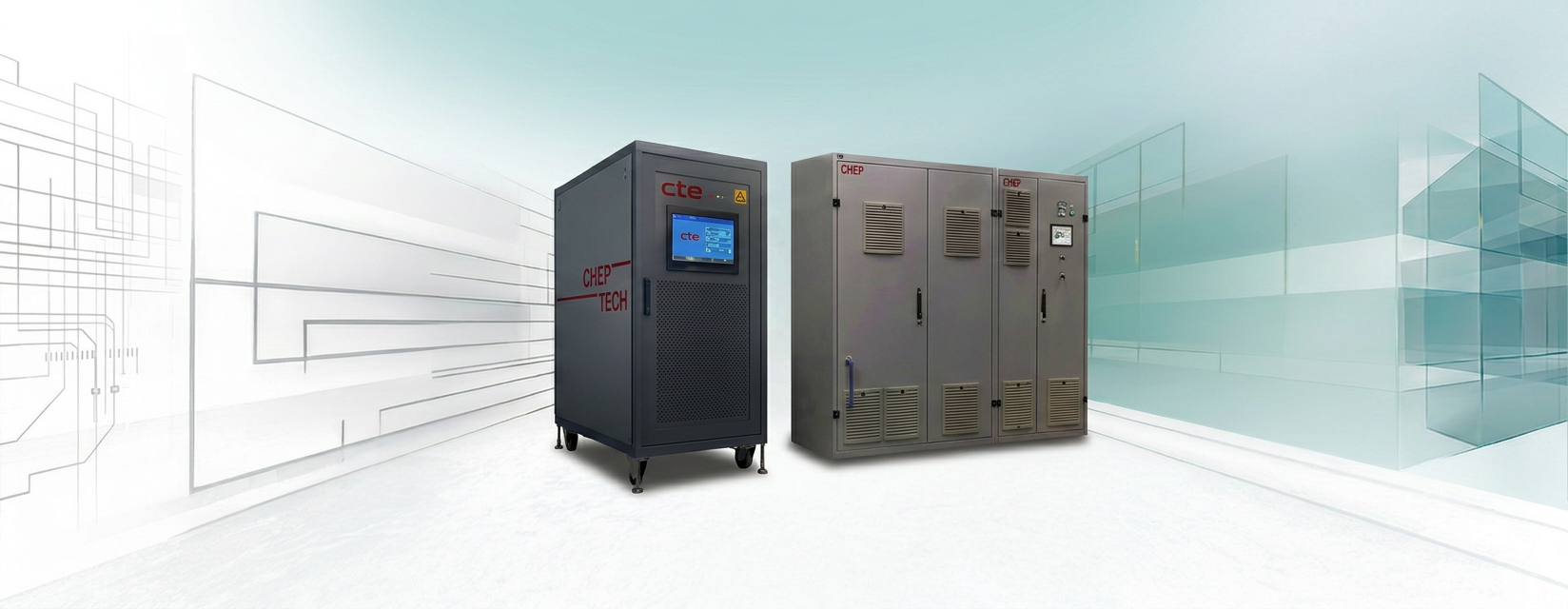
BBU Battery Backup Module Test Solutions

From Rack-Level Backup to High-Voltage Systems — Validate Uninterrupted Power with Confidence

Reproducible | Quantifiable | Traceable BBU Validation

Why CHEN TECH ELECTRIC?

AI, cloud computing, and HPC are pushing rack power density to new levels, accelerating the shift from conventional UPS systems to rack-level Battery Backup Units (BBUs). Today, BBU validation goes far beyond confirming discharge capability. Engineers must verify backup runtime, response time after a DC bus voltage drop, stability under high-voltage and high-power conditions, and long-term State of Health (SOH). CHEN TECH ELECTRIC brings these requirements together in a dual-platform architecture: BT-2000 for low-voltage applications and PBT-2000 for high-voltage systems. Both are managed through the unified iBest software platform and can be integrated with temperature chambers, BMS communications, and ES/ET measurement modules to create a reproducible, traceable, end-to-end validation environment.

Solution Overview

One platform strategy for BBU testing from 48V to high-voltage systems. BT-2000 is optimized for 48V Core Pack applications, while PBT-2000 supports 600V, 800V, and 1000V high-voltage architectures with regenerative efficiency of up to 95%. Together, they help R&D, quality, and production teams validate backup runtime, transient switching, cycle life, SOH, and BMS interaction.

Key Validation Challenges

Challenge Engineering Question

Validation Focus

Backup Duration Can the system sustain the data-protection window after power loss? CC / CP discharge and energy reports
Transient Switching Is intervention fast enough after a Bus voltage drop? Scenario-based test steps and transition capability
Dual Voltage Architecture 48V and 800V architectures coexist BT-2000 + PBT-2000
State of Health Is backup still reliable after aging? SOH, cycling, DCIR
Communication Integration Are BMS strategies and protection functions correct? CAN / Modbus / SMBus

Dual-Platform Validation Architecture

Choose the right test platform for each voltage level — from cell-level development to complete HV Pack validation:

Architecture Level

Typical Voltage Test Focus

Recommended Product

Front-End Cell Testing 5V Material / cell screening, Pulse / DCIR BT-2000 5V
BBU Module ~48V Capacity, internal resistance, cycling, SOH, communications, backup duration, Bus triggering BT-2000 60V
HV Pack / HV BBU 600 / 800 / 1000V High power, regeneration, dynamic operating profiles, BMS PBT-2000

Core Test Capabilities

Low Voltage | BT-2000 + iBest (~48V Core Pack / OCP)

  • Recommended configurations: 60V/60A and 60V/100A; higher-current options include 60V/300A and 100V models. For cell-level development, 5V high-current systems are available.
  • Validate capacity and backup runtime, charge/discharge performance, cycle durability, and DC bus / power-loss scenarios.
  • Run pulse and dynamic-power profiles (Pulse / HPPC), application waveforms, and DCIR / ACIR measurements.
  • High-precision measurement at ±0.02% F.S., charge/discharge transition in <5 ms, four current ranges, and modular multi-channel expansion.

High Voltage | PBT-2000 + iBest (800V Recommended)

  • Supports 600V / 800V / 1000V systems, 100–500 kW power levels, and 200 / 600 / 1000A current configurations.
  • Designed for high-power charge/discharge, cycle durability, Pulse / HPPC, FUDS / DST, and user-defined waveform testing.
  • Fast transition in <2 ms, regenerative efficiency up to 95%, PF >0.99, plus dual operating modes for battery testing and battery simulation.

Advanced Integration Options

  • Temperature Chamber — Validate backup performance and protection behavior across different temperature conditions.
  • BMS Data Collector — Verify protection logic, dynamic charging strategies, and stage-transition conditions via CAN / Modbus / SMBus and other interfaces.
  • ES-100B — Monitor individual cell voltages and voltage consistency.
  • ET-100B/C — Monitor temperatures and hotspots at multiple measurement points.
  • High-Voltage Fixtures & Interlocks — Add isolation and interlock protection for safer high-voltage testing.

Recommended Test Packages

Package

Application Recommended Configuration

Coverage

BBU Cell Lab Front-end cell testing BT-2000 5V + Pulse / DCIR Capacity, Pulse, DCIR
BBU Pack Basic 48V Core Pack BT-2000 60V/100A + CP / BMS / Chamber Backup duration, cycling, BMS, environment
BBU Pack Pro 48V high power / OCP BT-2000 60V/300A + BMS / Chamber / ES / ET High power, Bus scenarios, consistency
BBU HV 800V High-voltage backup PBT-2000 800V + regeneration / BMS / ES / ET High power, regeneration, HPPC / waveforms, SOH

One Software Platform: iBest

iBest provides a unified environment for creating, executing, monitoring, and analyzing BBU test procedures — reducing training effort and making test workflows easier to reuse across projects.

  • Process Setup — Variable-based cutoff conditions, C-rate settings, process preview, and configurable protection limits.
  • Test Modes — HPPC / DST / FUDS / Waveform / Pulse / DCIR / CP.
  • Real-Time Monitoring — Live curves, scheduled pause, resume testing, and dual-layer protection.
  • Data & Analysis — Reports, CSV / Excel export, dQ/dV, and SOC analysis (optional).
  • System Integration — Temperature chambers, CANbus / BMS, external measurement equipment, and MES integration (optional).

Integrated Safety by Design

Safety is built around a layered workflow: Detection → Protective Action → Event Traceability. For high-voltage test environments, additional isolation and interlock measures can be incorporated to help protect operators, the DUT, and the test facility.

A typical system connects iBest on a PC with BT-2000 or PBT-2000 charge/discharge equipment, while integrating a temperature chamber, BMS communications, ES-100B voltage acquisition, and ET-100B/C temperature acquisition. The result is a single test environment for performance, communications, and environmental validation.

Need Help Selecting the Right Configuration?

Share your DUT voltage architecture, transient current or power requirements, target test items, and channel count. CHEN TECH ELECTRIC can help you select the right system, plan test procedures, and evaluate fixtures.

BT-2000 and PBT-2000 solutions are now available. Explore product details and specifications on the CHEN TECH ELECTRIC website.

BT-2000 Series: https://www.chentech.com.tw/eindex/project/bt-2000-series/

PBT-2000 Series: https://www.chentech.com.tw/eindex/project/pbt-2000-series/


CHEN TECH ELECTRIC MFG. CO., LTD.

Tel: +886-2-2278-3825

Email: sales@chentech.com.tw

Website: https://www.chentech.com.tw/

Address: 1F., No. 27, Ln. 61, Sec. 1, Guangfu Rd., Sanchong Dist., New Taipei City, Taiwan

 

READ MORE

UAV Battery Test Solutions

Fly Farther. Fly Smarter. Fly Safer. — Battery Validation from Cell to Pack

Reproducible | Quantifiable | Traceable UAV Battery Validation

Why CHEN TECH ELECTRIC?

As UAV missions become longer and payloads heavier, battery performance increasingly defines flight endurance, peak power capability, and operational safety. Validation must therefore go beyond static capacity measurements to cover high-rate pulses, real-world flight load profiles, environmental aging, BMS strategies, and test-process support for standards such as IEC 62133 and UN 38.3. CHEN TECH ELECTRIC provides a complete validation approach built around the BT-2000 platform, covering cells through Packs. With iBest, actual flight profiles can be converted into executable test sequences, while temperature chambers and BMS / ES / ET integration enable a reproducible, quantifiable, and traceable UAV battery validation environment.

Solution Overview

UAV Battery Test Solutions | From Cell to Pack. From cell development and compact battery Packs to medium-size, high-rate modules, CHEN TECH ELECTRIC supports RPT, HPPC, high-rate pulse testing, flight-load simulation, environmental aging, and safety-test process support — helping shorten development cycles and improve flight reliability.

Market Trends & Testing Requirements

Advances in UAV technology and evolving regulations are accelerating adoption across agriculture, logistics, environmental monitoring, and disaster response. As missions become more demanding, battery design and performance directly affect endurance, mission reliability, and flight safety. Extreme temperatures can accelerate aging and capacity loss, making standardized performance testing and dynamic load simulation essential for evaluating battery capability under real-world mission conditions.

Application-Based System Selection

Category Takeoff Weight Voltage Range Peak C-Rate (Reference)

Recommended Product

Small UAV <25 kg Approx. 12–60V (4S–14S) Approx. 10–20C BT-2000 60V/60A or 100A
Medium UAV 25–150 kg Approx. 60–100V (16S–24S) Approx. 15–25C BT-2000 100V/300A
Cell / Module R&D Cell approx. 0–6V Depends on chemistry BT-2000 5V / MCL2

Key Validation Challenges

Area Engineering Question

Validation Focus

Performance Can capacity and available power support the mission? RPT, energy / temperature-rise reports
Dynamic Can the battery stably deliver sudden current during takeoff and climb? HPPC, Pulse, flight-profile simulation
Reliability Does it remain controllable after high/low-temperature exposure and aging? Chamber, SOH, BMS, DCIR

Flight Performance & Endurance Validation

Regular Reference Performance Tests (RPT) provide a standardized way to track capacity, energy, and temperature rise under controlled charge/discharge conditions. Combined with Hybrid Pulse Power Characterization (HPPC) and flight-current load simulation, engineers can evaluate peak current during takeoff and climb, available power, and discharge behavior — building a more realistic picture of battery capability throughout the mission.

Core Test Capabilities

  • RPT Reference Performance — Standardized measurement of capacity, energy, and temperature rise
  • Cycle Life — Track capacity fade over repeated mission cycles
  • HPPC — Evaluate available power during climb and sudden load changes
  • High-Rate Pulse — Verify high C-rate output for takeoff and other peak-power events
  • Flight Load Simulation — Reproduce takeoff → cruise → hover → landing profiles using Waveform / DST / FUDS / custom profiles
  • DCIR / ACIR — Use internal resistance as an indicator of battery quality and aging

Platform Highlights

  • Cell Platform (BT-2000 5V / MCL2) — ±0.02% F.S. accuracy, voltage resolution down to the 10 μV level, and rise time <1 ms (<5 ms above 300A)
  • Pack Platform (BT-2000 60V / 100V) — 5V / 20V / 60V / 100V series, transition <5 ms, with optional channel paralleling and custom fixtures
  • Recommended Selection — 60V/60A or 100A for small UAVs; 100V/300A for medium-size and high-rate applications

Environmental, BMS & Safety-Test Support

  • Temperature Chamber Integration — Validate capacity, protection behavior, and aging at high and low temperatures
  • BMS / Communication Testing — Verify control strategies, protection logic, and stage-transition conditions
  • ES / ET Acquisition — Monitor cell-voltage differences and temperature hotspots within the Pack
  • Safety-Test Process Support — Build test procedures for IEC 62133, UN 38.3, and related requirements (does not provide automatic certification)
  • Shipping SOC Control — Bring SOC into the target range before shipment

Recommended Test Packages

Package Application Recommended Configuration Coverage
UAV Cell Lab Cell R&D 5V/100A or 200A + Pulse / HPPC / Waveform RPT, high-rate, HPPC, DCIR, life
UAV Pack Basic Small Pack 60V/60A or 100A + BMS / Chamber Flight load, RPT, BMS, environment
UAV Pack Pro Medium / high-rate 100V/300A + BMS / Chamber / ES / ET High-current Pack, consistency, SOH, environment


One Software Platform: iBest

iBest provides a unified environment for creating, executing, monitoring, and analyzing UAV battery test sequences. Standardized workflows reduce training effort and make test procedures easier to reuse across projects.

  • Process Setup — Variable-based cutoff conditions, C-rate settings, process preview, and configurable protection limits
  • Test Modes — HPPC / DST / FUDS / Waveform / Pulse / DCIR / CP
  • Real-Time Monitoring — Live curves, scheduled pause, resume testing, and dual-layer protection
  • Data & Analysis — Reports, CSV / Excel export, dQ/dV, and SOC analysis (optional)
  • System Integration — Chamber, CANbus / BMS, external measurement equipment, and MES integration (optional)

Integrated Safety by Design

Safety is built around layered protection: condition detection, protective action, event recording, and traceability. This approach helps protect operators, the battery under test, and the test environment throughout the validation process.

A typical system connects iBest on a PC with the BT-2000 charge/discharge platform and can integrate a temperature Chamber, BMS / Gas Gauge, ES-100B voltage acquisition, and ET-100B/C temperature acquisition — bringing performance, communication, and environmental validation into one test environment.

Need Help Selecting the Right Configuration?

Share your DUT voltage architecture, peak current or power requirements, target test items, and channel count. CHEN TECH ELECTRIC can help you select the right system, plan test procedures, and evaluate fixtures.

BT-2000 and MCL2 solutions are now available. Explore product details and specifications on the CHEN TECH ELECTRIC website.

BT-2000 Series: https://www.chentech.com.tw/eindex/project/bt-2000-series/

MCL2 Series: https://www.chentech.com.tw/eindex/project/mcl2-series/


CHEN TECH ELECTRIC MFG. CO., LTD.

Tel: +886-2-2278-3825

Email: sales@chentech.com.tw

Website: https://www.chentech.com.tw/

Address: 1F., No. 27, Ln. 61, Sec. 1, Guangfu Rd., Sanchong Dist., New Taipei City, Taiwan
READ MORE

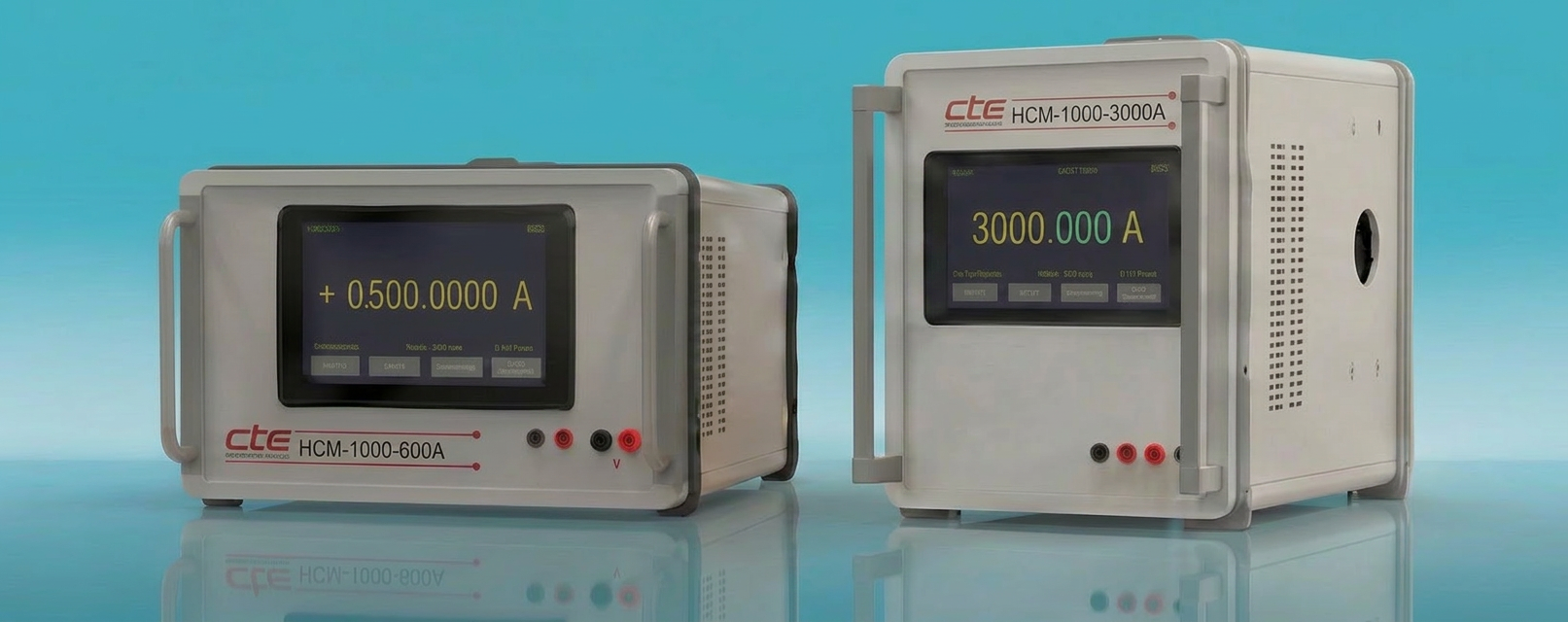
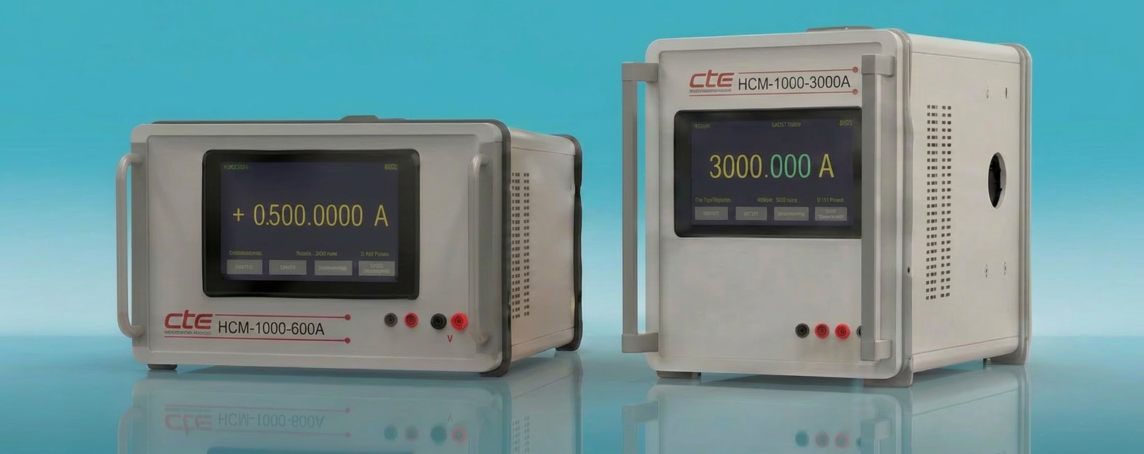
Chen Tech Enters Digital Multimeter Market, Unveils HCM-1000 High-Precision High-Current Meter

Solving Energy Storage and EV Measurement Pain Points: Automatic Range-Switching Technology Sets New Industry Standard

With the booming development of the renewable energy, electric vehicle (EV), and battery energy storage system (BESS) markets, the industry’s demand for “high-precision” and “high-current” DC measurement is experiencing explosive growth. Chen Tech, a leading global provider of power electronics testing solutions, today officially announced the launch of its brand-new “HCM-1000 High-Precision High-Current Meter”. This is not only a major technological breakthrough for Chen Tech, but it also marks the debut of its product line crossing into the digital meter field, providing the industry with more precise and secure power monitoring solutions.

Breaking Through Traditional Limitations to Directly Address Three Major High-Current Measurement Pain Points

In the past, high-current measurement environments frequently faced technological bottlenecks. Traditional shunt resistors (Shunt) or single-sensor methods often generate severe heat and power loss when handling high currents. This not only directly impacts measurement accuracy but also harbors potential safety risks. Furthermore, traditional instruments struggle to balance a “wide range” with “high precision” and lack intuitive user interfaces, resulting in low efficiency for data acquisition and equipment management.

HCM-1000 Series: Smart Switching Technology Defining a New Height in Measurement

Developed by Chen Tech to address the aforementioned pain points, the HCM-1000 Series features the following key innovative highlights, completely revolutionizing existing measurement paradigms:

  • Exceptional Measurement Accuracy and Thermal Stability: The HCM-1000 delivers industry-leading, high-precision, high-current DC measurement capabilities. It effectively overcomes errors caused by thermal loss in traditional methods, ensuring authentic and reliable data.

  • Exclusive Multi-Stage Automatic Range Switching: Equipped with advanced automatic range-switching technology, the instrument automatically shifts to the optimal measurement segment based on the current level. This perfectly solves the long-standing industry challenge of being unable to maintain low-current precision under high-current conditions.

  • Embedded Smart Touch Interface: Featuring an embedded system and an intuitive touch panel, it achieves real-time display and dynamic control. This significantly enhances operational convenience and optimizes data management efficiency, aligning with digital transformation needs.

  • Broad Industry Application: This series is specifically engineered for renewable energy grids, energy storage systems, and EV charging/discharging test environments, offering a highly practical and durable testing platform.

  • Wide Scope of Applications: It delivers superior convenience and accuracy for high-current measurement, current calibration of charging/discharging equipment, and input/output current measurement and certification for EVs or energy storage devices.

Deepening Roots in Energy Technology, Moving Toward All-Around Testing Solutions

Chen Tech stated: “The debut of the HCM-1000 Series symbolizes Chen Tech’s determination to extend its reach from battery testing equipment into the field of precision instrumentation. During this critical period of energy transition, precise data is the foundation of technological innovation. The HCM-1000 will help customers shorten verification time and enhance system safety when developing energy storage and EV battery systems.”


The related product line, the HCM-1000 Series, has officially been launched in the market. To learn more about product details and technical specifications, please visit the official website of Chen Tech.

About Chen Tech

Chen Tech is a world-leading provider of power electronics testing equipment, dedicated to delivering high-efficiency and high-precision testing solutions for the electric vehicle (EV), green energy, and semiconductor industries. Through continuous technological innovation, we empower our customers to master critical power data and ensure system stability on their journey toward achieving net-zero emissions.

READ MORE

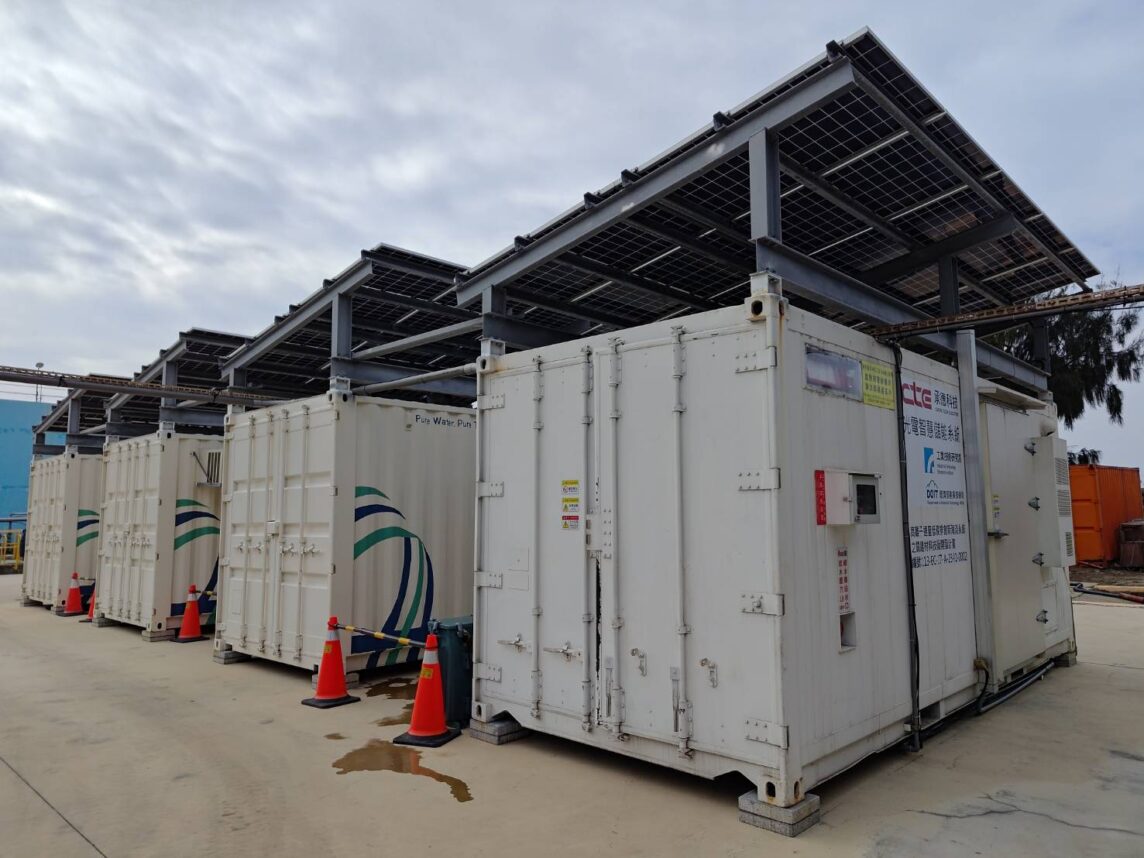
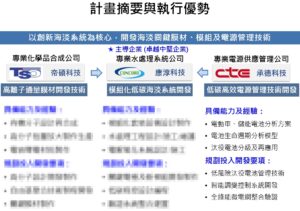
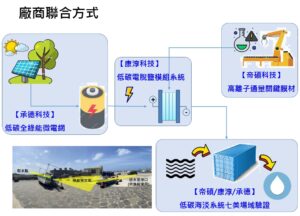
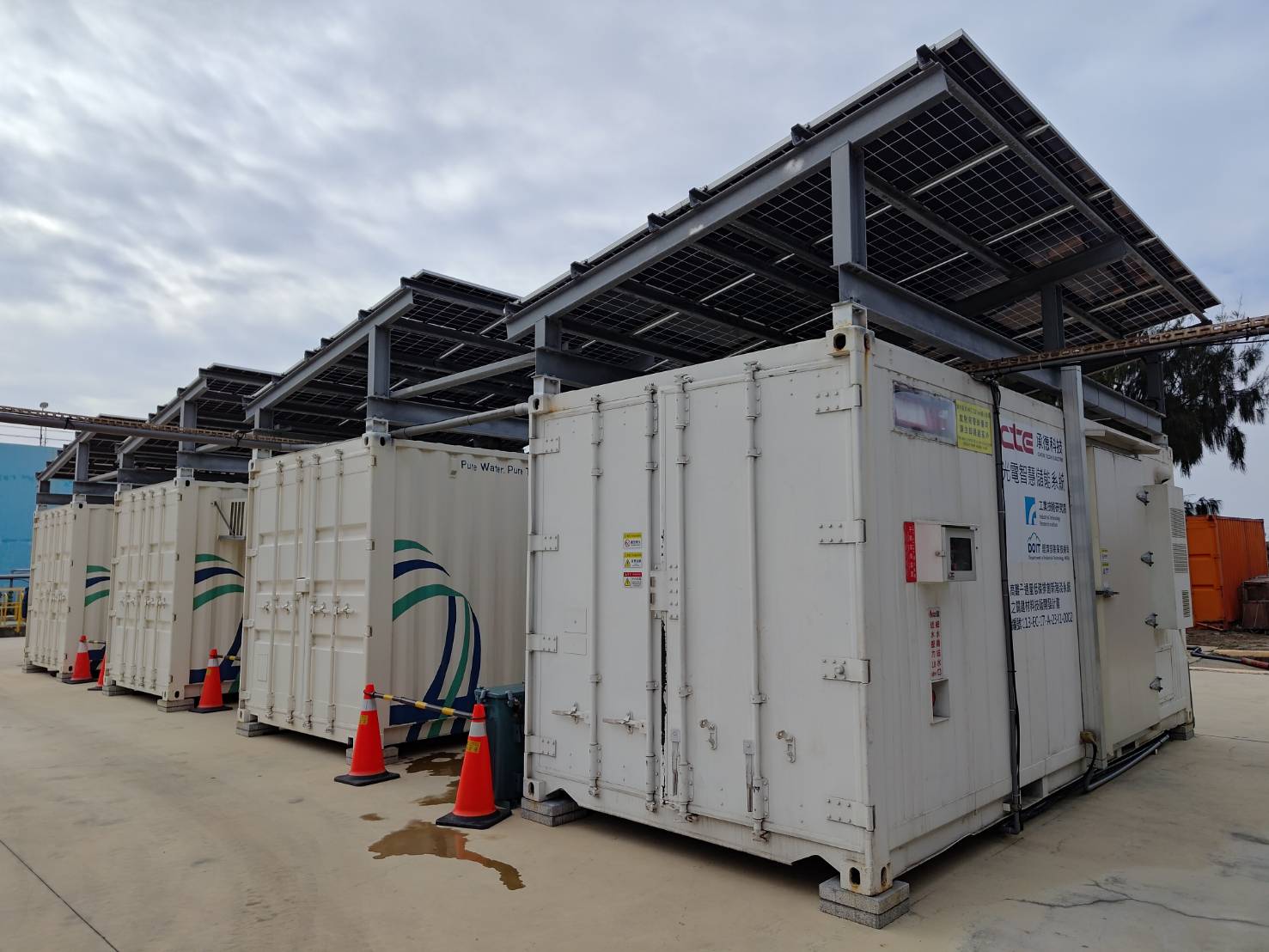
DoIT Technology Research and Development Project — Frontier Technology R&D Program / High-Ion-Flux and Low-Carbon-Emission Innovative Desalination System

Project Scope of Chen Tech

1. Development of Low-Risk Retired Battery Management Technology

  • Pre-input Verification Mechanism for Retired Batteries: Designed a verification mechanism covering traceability, visual inspection, and protection function checks to ensure baseline safety.

  • Cell & Core-Pack Level Pre-input Inspection: Fast SOH (State of Health) estimation for cells and core packs prior to deployment, with an error margin of <±8%.

  • Module-Level Online SOH Monitoring: Continuous online SOH monitoring at the module level, with an error margin of <±3%.

  • In-Use Risk Feature Detection & Rapid Screening for Retired Batteries: * Achieved a >90% accuracy rate for the rapid detection of “balancing cycle activation” and “balancing failure.”

    • Implemented multi-level warning systems based on dynamic detection of:

      • Bottleneck cell features (probability of minV_ID ≧70%)

      • Work-and-rest behavioral features (standardized deviations: LVS, HVS)

      • Temperature profile features (temperature variance ≦5℃).

2. Development of High-Efficiency Intelligent Microgrid Control System

  • Asynchronous Adaptive Charge/Discharge Algorithm among Battery Packs: Enables asynchronous operations between battery packs with a response and decision-making time of 0.9 seconds.

  • In-Operation Battery Decommissioning Mechanism: Allows dynamic decommissioning of battery packs during operation, with a battery branch power redistribution response time of 0.292 seconds.

  • Performance Verification of Low-Carbon, Full-Green-Energy Microgrid: Achieved a conversion efficiency of 93.3% under direct green energy supply.

3. Full-Green-Energy Microgrid Integration and Field Validation

  • Green Energy Power Supply Design: Designed for an average daily power generation of 82.1 kWh, with a maximum field-tested power generation of 98 kWh.

  • Thermal Testing of Battery Modules in Full-Green-Energy Microgrid: Field test results showed an actual operating temperature of 40℃ for the battery modules at an ambient temperature of 36℃.

  • Field Deployment of Low-Carbon, Full-Green-Energy Microgrid: Achieved an actual peak power supply capacity of 90 kWh at the deployment site.

Current Achievements

The overall R&D deliverables of this project are highly comprehensive, demonstrating exceptional technical innovation and strong alignment with government policies. With field validation successfully completed, the project possesses significant potential for subsequent application expansion and commercial development. These research achievements fully meet the advanced technology R&D objectives of the A+ Industrial Innovation R&D Program, reflecting an overall excellent execution performance.

The related product line, the SSMESS Series, has officially been launched in the market. To learn more about product details and technical specifications, please visit the official website of Chen Tech.

About Chen Tech

Chen Tech is a world-leading provider of power electronics testing equipment, dedicated to delivering high-efficiency and high-precision testing solutions for the electric vehicle (EV), green energy, and semiconductor industries. Through continuous technological innovation, we empower our customers to master critical power data and ensure system stability on their journey toward achieving net-zero emissions.

READ MORE

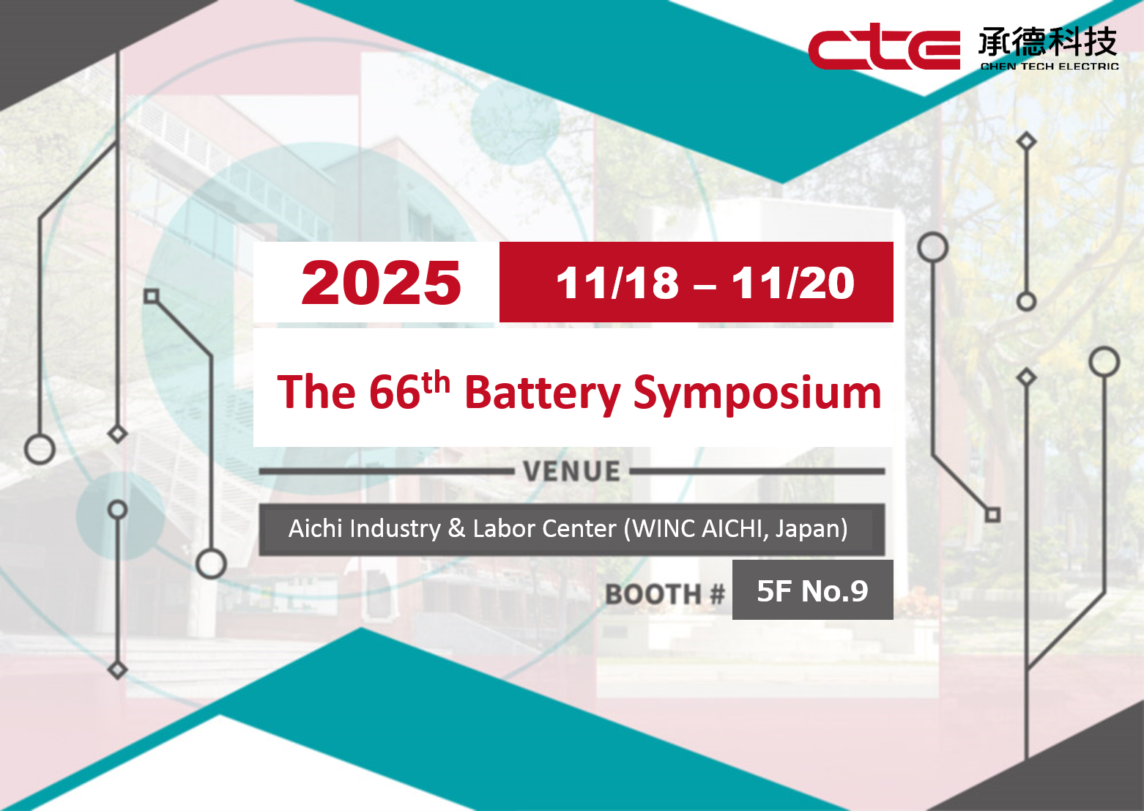
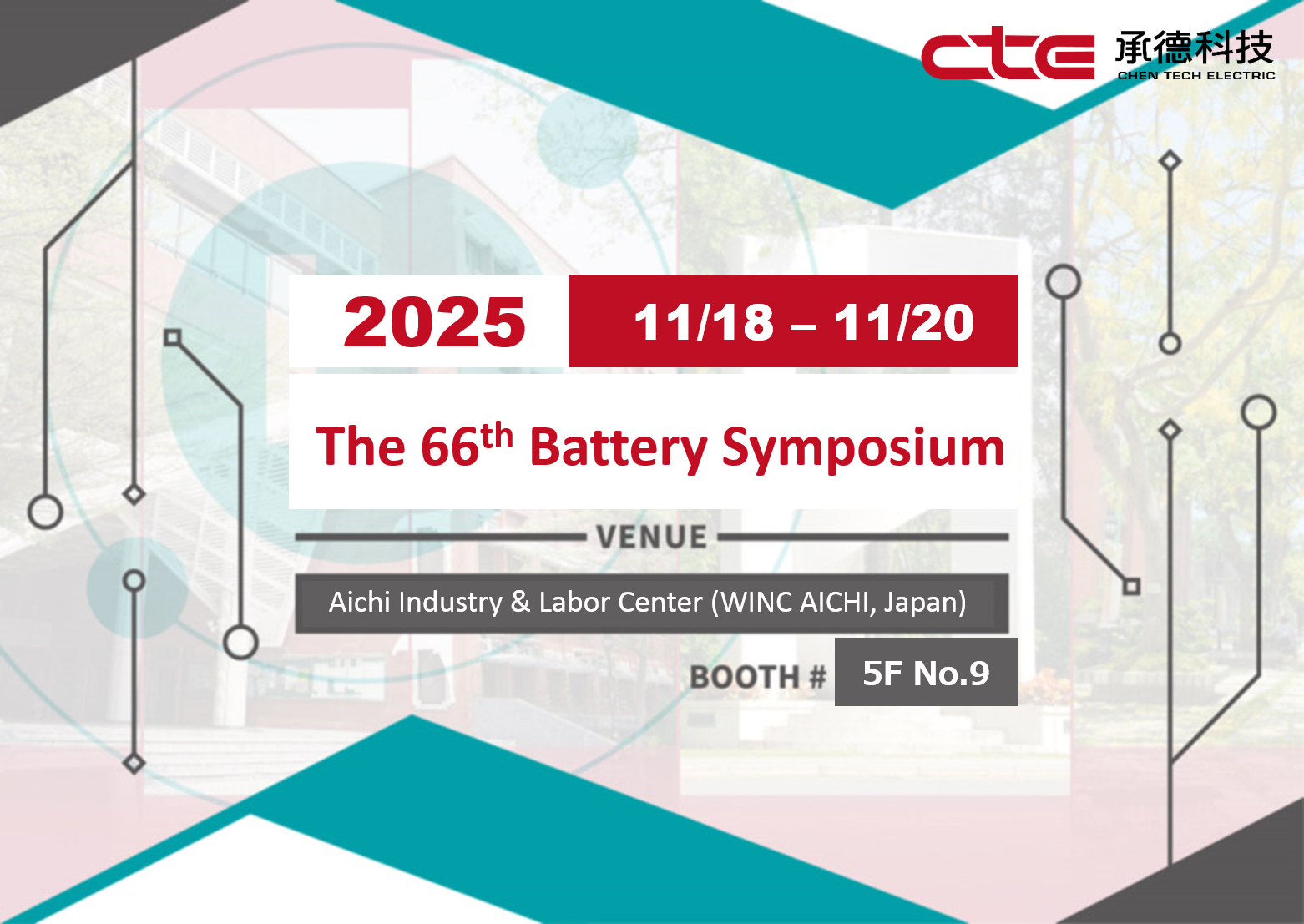
2025 The 66th Battery Symposium

We invite you to visit us at The 66th Battery Symposium in Japan!

Exploring the endless possibilities on battery test with us.

Meeting us in WINC AICHI Japan, checking our latest technology on our high power battery testing equipment.

Making a reservation with us now.

——————————————————————————————————————————————————————————————————————–

Dates: Nov.18th – Nov. 20th , 2025

Venue: Aichi Industry & Labor Center (WINC AICHI)

Booth : 5F, No.9

READ MORE

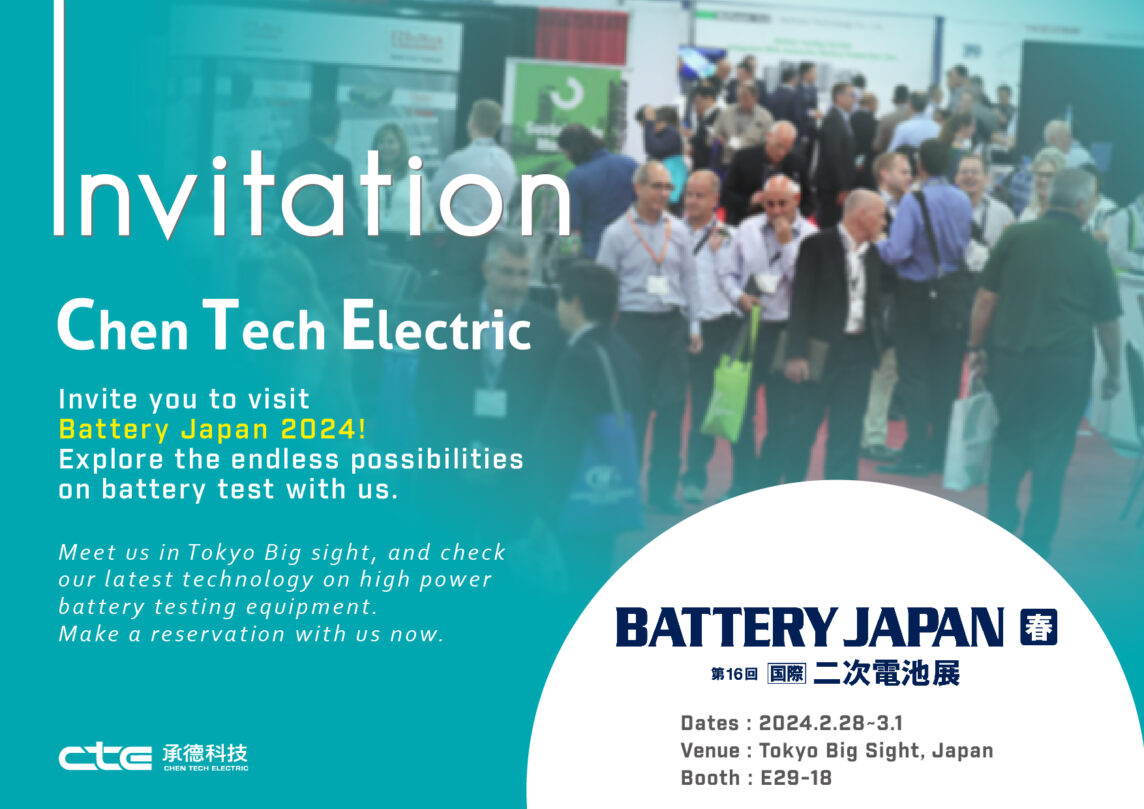
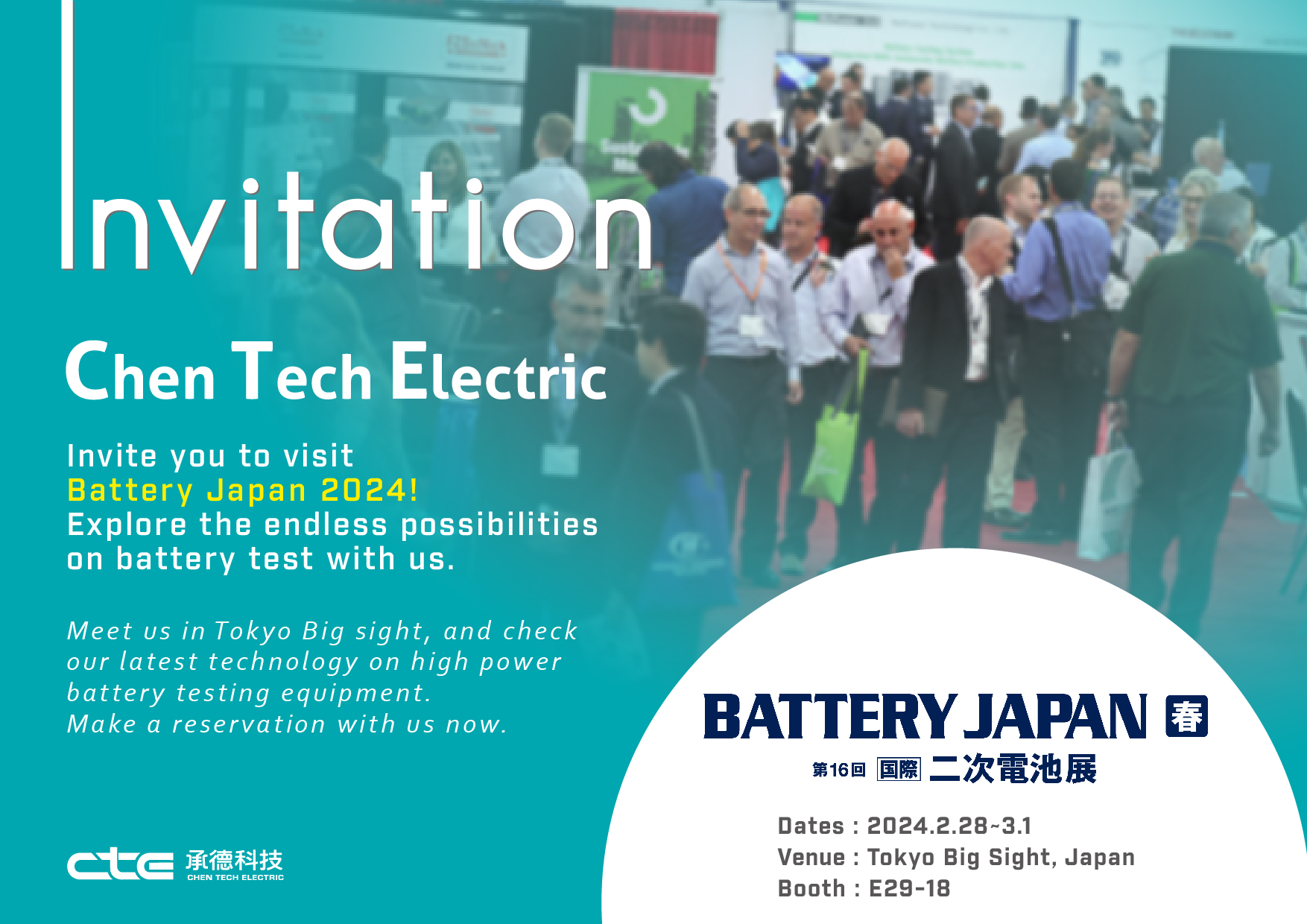
Chen Tech Electric will be exhibiting at BATTERY JAPAN 2024 !

Dates: Feb.28th – Mar.1st , 2024

Venue: TOKYO BIG SIGHT, JAPAN

Booth : E29-18


We invite you to visit us at Battery Japan 2024 !

Exploring the endless possibilities on battery test with us.

Meeting us in Tokyo Big Sight, checking our latest technology on our high power battery testing equipment.

Making a reservation with us now.

READ MORE

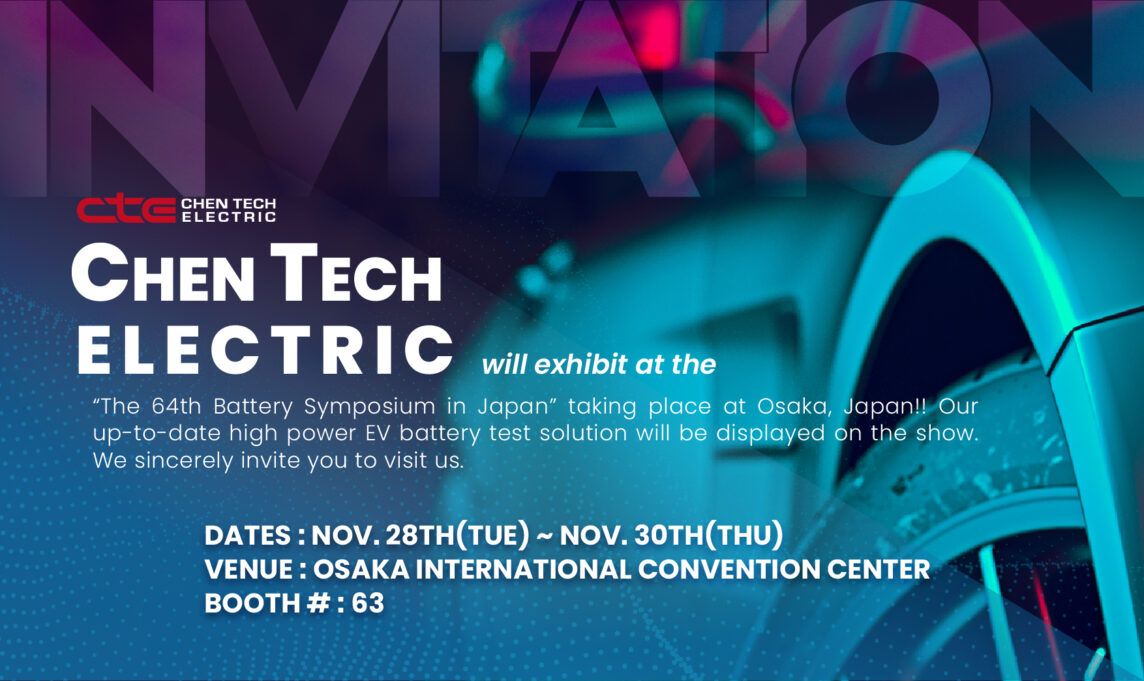
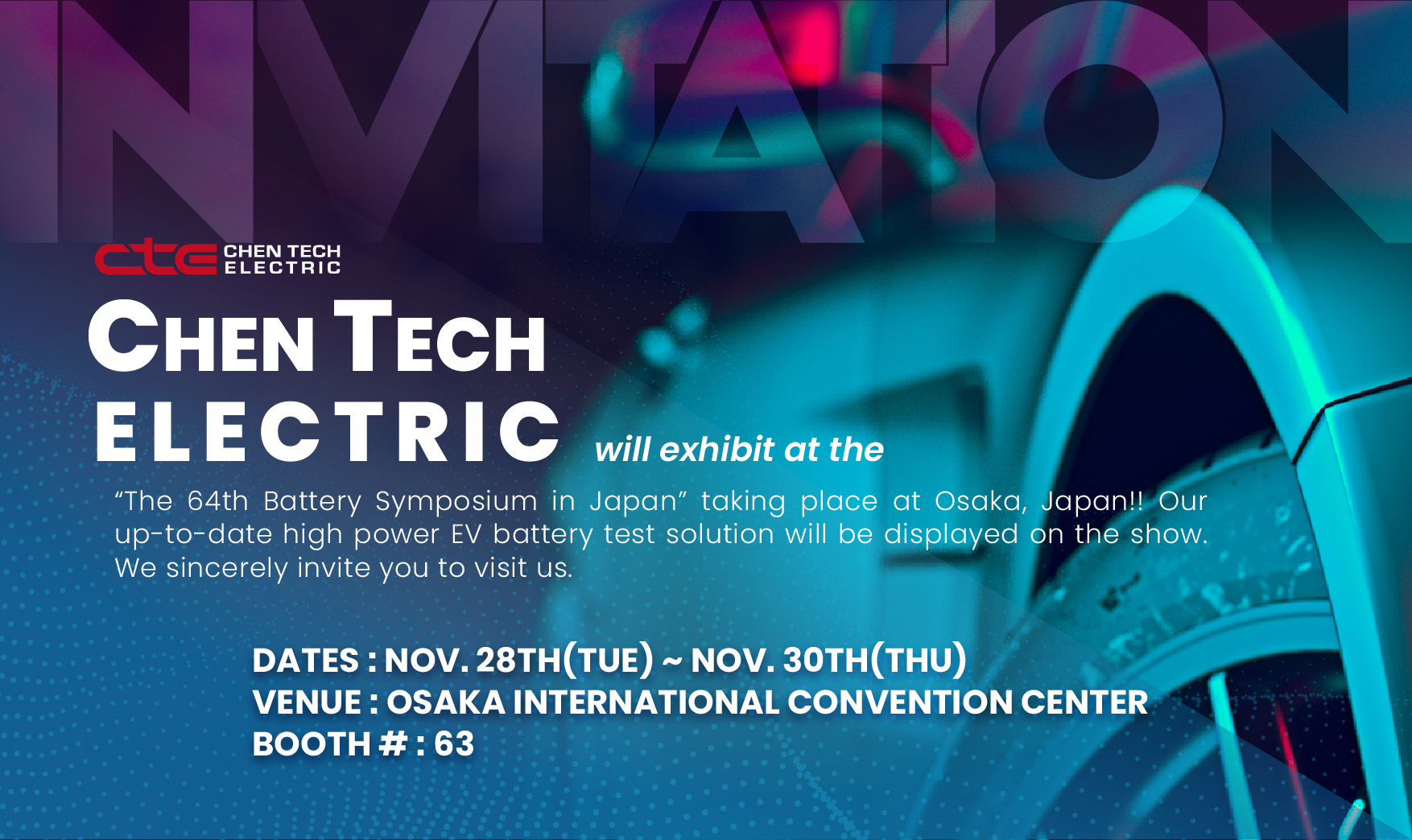
THE 64th BATTERY SYMPOSIUM IN JAPAN 2023

Dates: Nov.28th – Nov.30th , 2023

Venue: OSAKA INTERNATIONAL CONVENTION CENTER, OSAKA, JAPAN

Booth #: 63

Chen Tech Electric will exhibit at “ the 64th Battery Symposium in Japan” taking place at Osaka, Japan!! during Nov. 28th – Nov. 30th , 2023.

Our up-to-date high power EV battery test solution will be displayed on the show.

We sincerely invite you to visit booth #63. Please feel free response the message to make an appointment with us in advance.

https://www.jtbwmice.com/2023/denchi64/en/

READ MORE

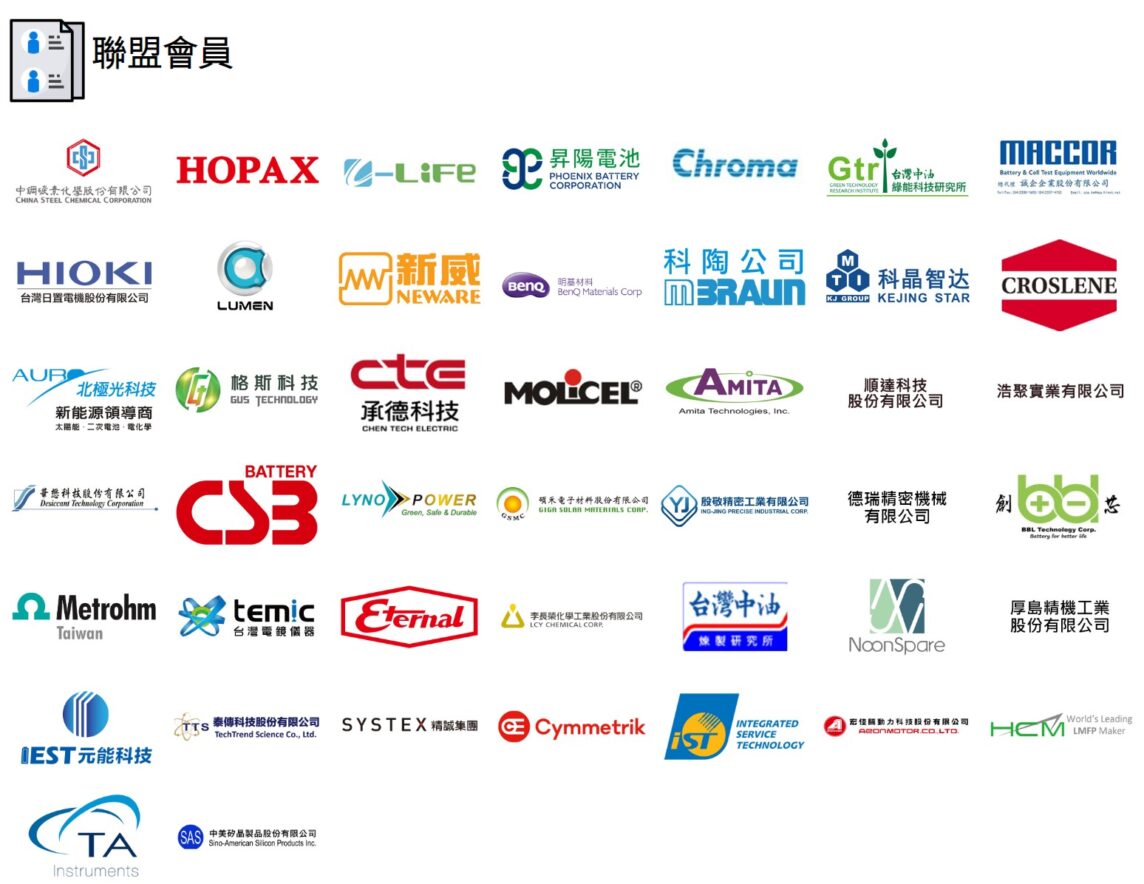
Chen Tech Electric was Invited to be An Industry Member of【LIB Academia-Industry Alliance】By National Tainan University

Chen Tech Electric was Invited to be An Industry Member of
【LIB Academia-Industry Alliance】By National Tainan University

The Lithium Battery Academia-industry Alliance was established in 2015 with the support of the Ministry of Science and Technology in Taiwan. With the integration power of industry and academia, the Alliance actively researches and develops energy storage materials, tandem materials, cells, battery packs, and system applications for large-capacity electric vehicle batteries. Expanding the global market to promote the development and economic niche of Taiwan’s lithium battery energy storage industry.

Chen Tech Electric is one of the industry members of the Industry-University Alliance and enjoys all the services provided by the alliance, such as cooperative research, related technical consultation, instrument sharing, company publicity, talent training, and other rights. Alliance industry members provide industry-university cooperation programs, while academic members and research teams provide relevant technical guidance, ultimately making the lithium-ion battery industry-university alliance self-sufficient in funding and creating a win-win situation for both parties.

READ MORE